

Your Ultimate Guide to Tax Documents: W-2, 1099, and Schedule C Explained
Navigating the world of US taxes can feel like deciphering a complex code, especially when you’re trying to figure out which forms you need to file. Whether you’re a long-time employee, a burgeoning freelancer, or a small business owner, the documents you receive and the forms you need to complete are fundamentally different. Understanding these distinctions is not just about avoiding penalties; it’s about ensuring you take advantage of every possible deduction and credit to maximize your refund or minimize your tax liability.
At Jimenez Consulting & Tax Services, we believe that informed clients are empowered clients. This comprehensive guide will walk you through the essential tax documents you need to know about based on your classification: as a W-2 employee, a 1099 contractor, or a Schedule C business owner. We’ll break down the purpose of each form, what information they contain, and how they impact your overall tax return. By the end, you’ll have a clear roadmap to prepare for tax season with confidence.
The W-2 Employee: A Clear Path for Wage Earners
For most Americans, the W-2 form is the cornerstone of their tax filing. If you work for an employer who withholds federal and state taxes from your paycheck, you are a W-2 employee. This classification offers a straightforward tax experience, as much of the heavy lifting is handled by your employer. They are responsible for calculating and submitting your FICA taxes (Social Security and Medicare) and for withholding income tax based on the W-4 form you completed upon hiring.
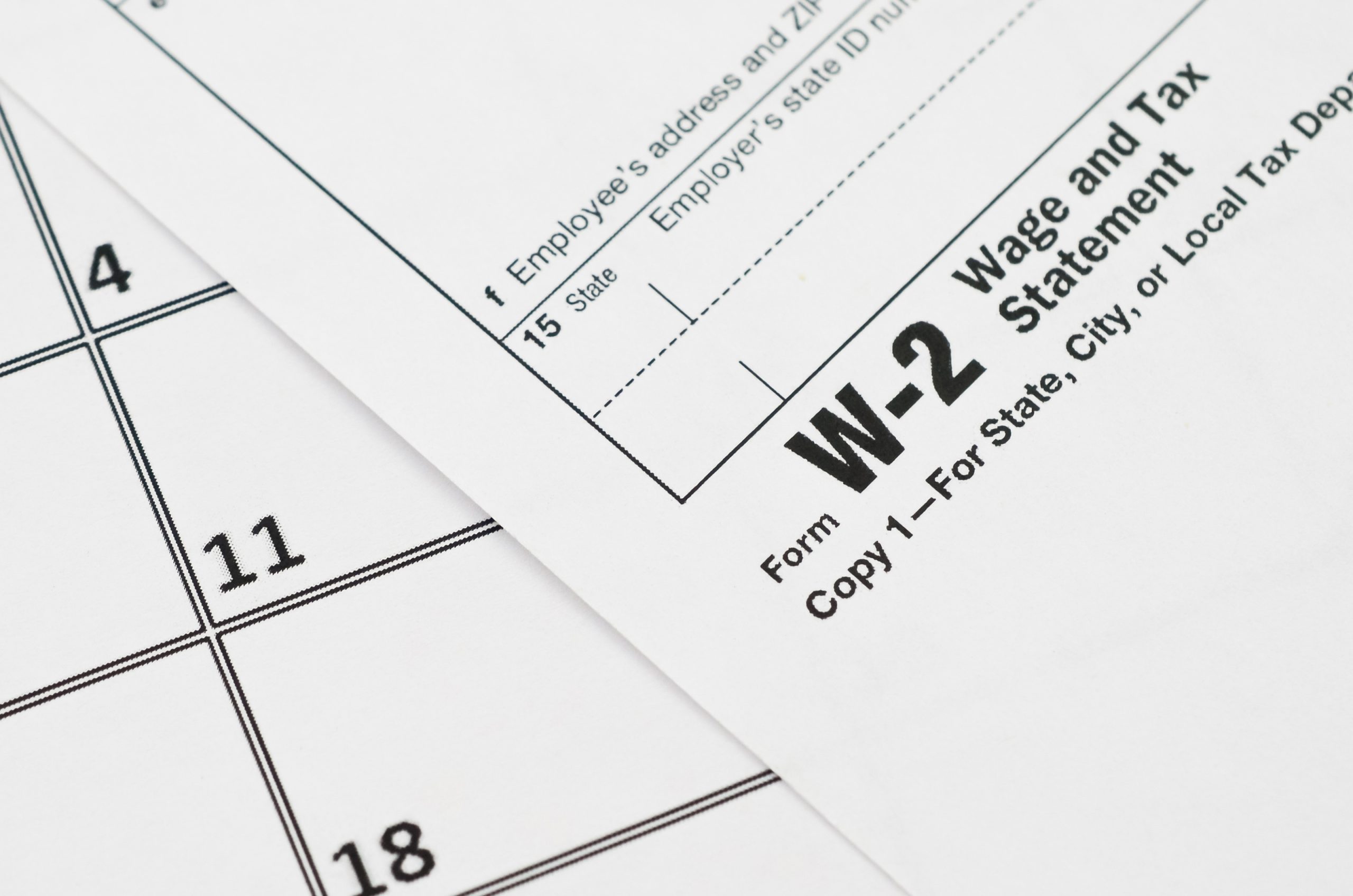
The W-2, officially known as the “Wage and Tax Statement,” is a document sent by your employer that reports your annual wages and the amount of taxes withheld from those wages. Employers are legally required to send this form to you and to the Social Security Administration (SSA) by January 31st each year. If you haven’t received it by early February, it’s crucial to contact your employer’s payroll department.
Key Information on Your W-2
A typical W-2 form is a treasure trove of financial data. Understanding each box is key to a smooth filing process:
- Box 1 (Wages, tips, other compensation): This is your total taxable income. It’s the number you’ll likely use to start your tax return.
- Box 2 (Federal income tax withheld): The total amount of federal tax your employer has already paid on your behalf.
- Box 3 (Social Security wages) & Box 4 (Social Security tax withheld): These boxes report your income subject to Social Security tax and the amount withheld.
- Box 5 (Medicare wages and tips) & Box 6 (Medicare tax withheld): Similar to the Social Security boxes, these show your income for Medicare and the tax paid.
- Boxes 15-20 (State and local taxes): These detail your state and local wages and the taxes withheld, which are essential for filing your state return.
Your W-2 is the primary document you’ll need to report your income on Form 1040, the main individual income tax return. Since your taxes are pre-paid through withholding, you may be eligible for a refund if your employer over-withheld or if you qualify for tax credits.
The 1099 Contractor: A World of Self-Employment and Opportunity
The rise of the gig economy has made the 1099 form as common as the W-2. If you are an independent contractor, freelancer, or gig worker, you are your own boss for tax purposes. This means no one is withholding taxes on your behalf. Instead of a W-2, clients or companies that pay you will issue a Form 1099-NEC (Nonemployee Compensation) if they pay you $600 or more in a calendar year.
Understanding Form 1099-NEC
The 1099-NEC is the successor to the old 1099-MISC for reporting nonemployee compensation. This form simply reports the total amount you were paid. Unlike a W-2, it does not show any taxes withheld. This places the full responsibility on you to pay income tax and self-employment taxes (Social Security and Medicare) on your earnings.
Implications for Your Tax Filing
As a 1099 contractor, your tax responsibilities are more extensive. You are responsible for paying:
- Federal and State Income Tax: You’ll need to report your income and calculate your tax liability.
- Self-Employment Tax: This is the equivalent of the Social Security and Medicare taxes that would be split between you and an employer if you were a W-2 worker. As a contractor, you pay both the “employee” and “employer” portions, which is currently a combined rate of 15.3%.
What You’ll Need to File
For tax purposes, you will report your 1099-NEC income on a Schedule C (Form 1040), which brings us to our next section.
The Schedule C Business Owner: Navigating the World of Sole Proprietorship
If you are a sole proprietor—someone who runs an unincorporated business by themselves—you will use a Schedule C to report your income and expenses. This is the form where you truly get to manage your tax picture, as it allows you to deduct a wide range of business-related expenses.
The Power of Schedule C
Schedule C is the form that calculates your net profit or loss from your business. You take all of your business income (from your 1099-NEC forms, cash payments, etc.) and subtract all of your eligible business expenses. The final number—your net profit—is then transferred to your personal Form 1040.
- Home Office Deduction: If you use a portion of your home exclusively for your business, you can deduct a percentage of your rent, utilities, and other home-related costs.
- Mileage and Vehicle Expenses: You can deduct a portion of your car expenses if you use your vehicle for business-related travel.
- Supplies and Equipment: Anything from a new laptop to office supplies.
- Business Insurance: Premiums for business liability, professional, or other relevant insurance policies.
- Advertising and Marketing: Costs for websites, business cards, online ads, etc.
The Interplay: When You’re a W-2 and a 1099
It’s increasingly common for individuals to hold a traditional W-2 job while also freelancing on the side. This is often referred to as having a “side hustle.” In this scenario, you will receive both a W-2 from your employer and one or more 1099-NEC forms from your freelance clients.
Filing as a “Hybrid” Contributor
Filing is relatively straightforward. You will first use your W-2 to report your wage income on Form 1040. Then, you will complete a Schedule C to report your 1099 income and expenses.
Planning for Success with Jimenez Consulting & Tax Services
Understanding the difference between a W-2, a 1099, and a Schedule C is the first step toward a stress-free tax season. At Jimenez Consulting & Tax Services, we specialize in helping individuals and small businesses navigate the complexities of tax law.